SeaTwirl has developed the basic design for the floating wind turbine in VERTI-GO
SeaTwirl has submitted the basic design documentation for the 2 MW floating vertical-axis offshore wind turbine being developed as part of the EU project VERTI-GO. The basic design defines the turbine’s main features and the project has progressed to detailed design, the project’s next major milestone. The aim is to meet all the technical requirements for a final investment decision, meaning that the turbine can be fabricated, installed and operated at sea. An investment decision also requires a contracted test site, secured funding, and all necessary technical documentation to have been approved.
SeaTwirl handed over the basic design to the project coordinator, University College Cork, which in turn submitted it to the EU’s executive agency, CINEA, on 29 September 2026. CINEA does not provide formal approval of the basic design, but has not so far requested any corrections or additions.
“VERTI-GO has progressed from a potential concept for a vertical-axis wind turbine to one that is feasible,” says Björn Fagerström, who leads the engineering work in VERTI-GO.
“I am impressed that our relatively small team has managed to complete the basic design on schedule.”
The main dimensions have been finalised
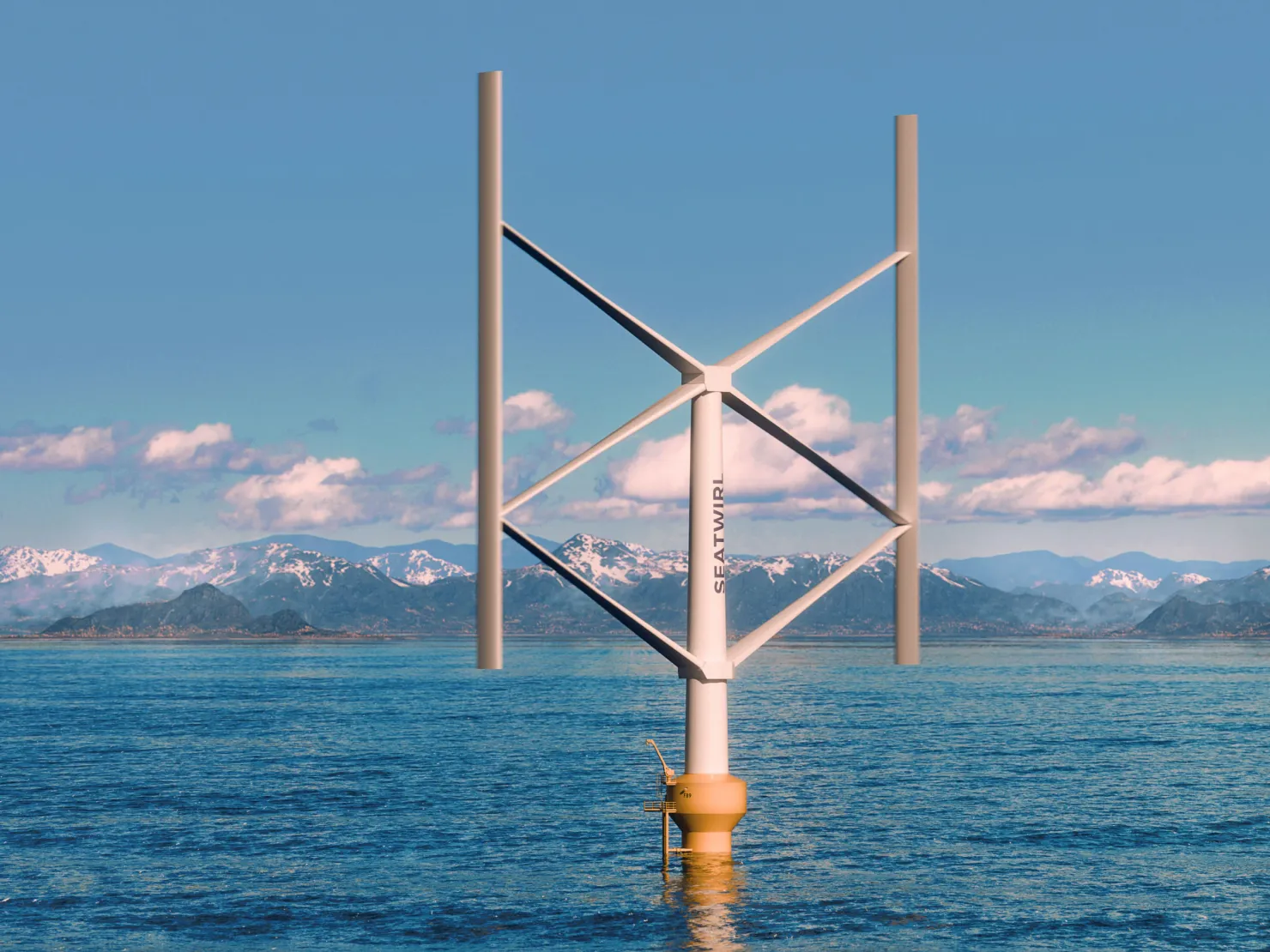
In the basic design, the engineers have determined the turbine’s major components and dimensions, such as the rotor diameter, the turbine’s height above the surface and how deep it extends below the surface. They have also determined the turbine’s overall structure, including the critical interfaces between the major components. For the critical load cases, they have analysed how the turbine as a whole is affected. A load case is a combination of wind, waves and operating mode that the turbine must withstand.
Now that the main dimensions and interfaces have been determined, SeaTwirl can ask suppliers for price estimates and proposals on how the turbine can be designed, assembled and possibly optimised. The price estimates will provide an indication of what the turbine will ultimately cost to build.
Assessed against the project’s objectives
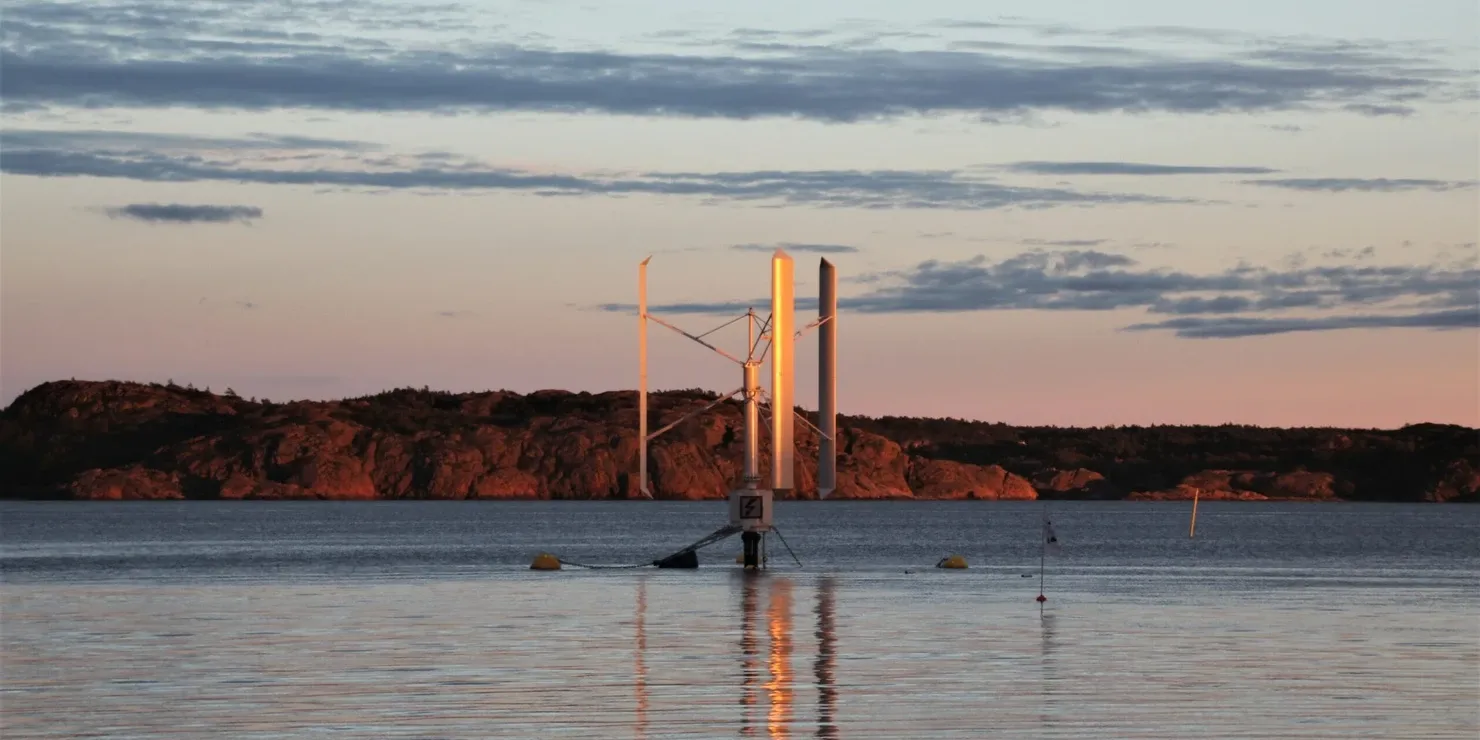
The turbine is a pilot plant aimed at demonstrating and verifying, under real-world offshore conditions, that the turbine meets its performance requirements and that the assumptions underlying SeaTwirl’s cost forecasts hold true. This is a major step for the project: with a capacity of 2 MW, the turbine will have almost 70 times the capacity of SeaTwirl’s 30 kW S1 prototype, which was located at sea off Lysekil from 2015 to 2025.
The basic design has been assessed against all of the project’s main objectives. The turbine must not only have an installed capacity of 2 MW but also generate sufficient power at all wind speeds to deliver the planned amount of energy.
The engineers have also taken great care to ensure that the turbine can be manufactured and installed using as much existing infrastructure and equipment as possible, to demonstrate that a broader supply chain can be utilised. One example is the rotor, which has two blades in the same plane and must be capable of being assembled whilst lying on the ground, preferably only using mobile cranes.
“We have succeeded in designing the turbine with a small number of systems, which results in lower complexity and less maintenance. We have also retained our flexibility in manufacturing and installation, so that we do not rely on expensive crane vessels,” says Björn Fagerström.
What remains in the detailed design
The turbine’s most important equipment was specified in the basic design. For certain smaller components, there is as yet only a reserved space with specified dimensions, which will be filled with the actual component during detailed design.
Detailed design began once the basic design had been submitted. This involves carrying out calculations for the remaining load cases using site-specific data, finalising the rest of the design work and determining the other systems. The result will form the basis for the final procurement of components and systems. However, some systems require further work in collaboration with the suppliers and may not be finalised until after detailed design.
Three conditions for construction
Once all technical documentation has been submitted, independent experts will assess the documentation and provide advice ahead of the investment decision. A positive investment decision requires, above all, three things: a contracted test site with a connection to the electricity grid, approved technical documentation from detailed design, and secured funding to build and operate the turbine.
The EU grant received by VERTI-GO accounts for a large and significant portion of the funding for the construction. In September 2026, SeaTwirl also received approval from the Swedish Energy Agency to transfer just over SEK 38 million from a previous grant to VERTI-GO, which further reduces capital needs for installation and operation. Together, the two grants cover a large proportion of the costs, and onwards the partners in VERTI-GO will work intensively to secure the remaining funding for the project.
“I am looking forward to the opportunity to build VERTI-GO’s demonstration turbine and validate its performance,” says Björn Fagerström.
About VERTI-GO
VERTI-GO is part of the EU’s Horizon Europe framework programme. The project began on 1 October 2025 and will run until 2029. Eleven partners from nine countries are sharing approximately EUR 15 million in EU funding, of which roughly half goes to SeaTwirl. The partners and the project’s objectives are presented on the VERTI-GO website (in English).
VERTI-GO is co-funded by the European Union. Views and opinions expressed are those of SeaTwirl only and do not necessarily reflect those of the European Union or CINEA. Neither the European Union nor CINEA can be held responsible for them.