When Wind Power Meets Local Communities
Swedes are generally positive about wind power, but support decreases when wind turbines are located close to people’s homes. As many as 74 percent of the population are positive towards wind power as an energy source, while only 32 percent are positive towards having wind power close to their permanent home. This is where a large part of the conflict arises. The question is therefore not whether we should have wind power, but how and where it can be developed with as little impact as possible.
The Role of Wind Power in the Energy Transition
Wind power plays an important role in Sweden’s future electricity system. Sweden is facing growing demand for electricity and needs to expand its power generation capacity to enable continued electrification. Wind power already accounts for a significant share of Sweden’s electricity generation.
The Swedish Energy Agency expects wind power, both onshore and offshore, to account for a large share of the new renewable electricity generation needed for an electrified society. There are also economic arguments. According to the IEA (International Energy Agency), onshore wind had the lowest average cost of new electricity generation globally in 2024.
Few People Want to Live Next Door
Despite broad support for wind power, attitudes change when developments are located closer to people’s own homes. In the SOM Institute’s 2024 survey, 74 percent of Swedes were positive towards wind power as an energy source, but only 32 percent were positive towards wind power near their permanent home.
At the same time, support for continued expansion has declined. In 2024, only 49 percent of Swedes wanted Sweden to invest more in wind power, the lowest share since the survey began in 1999. However, the SOM Institute emphasizes that the changes in recent years should be interpreted with caution, as the placement of the question in the survey may have influenced the results.
The difference between general support for wind power and attitudes towards developments in the local area can also be seen internationally. In a UK government survey conducted in spring 2026, 73 percent were positive towards onshore wind power, while only 37 percent were positive towards a wind farm in their local area. International research from Brazil, Germany, India, South Africa and the United States shows a similar pattern. Support for wind power is high in all five countries, but consistently somewhat lower when the question concerns development in the respondents’ own region.
What Causes Local Conflicts?
Local opposition is not only about attitudes towards wind power as an energy source, but also about how developments affect people’s everyday lives and local surroundings. Those living close to wind turbines experience a greater share of the local consequences, while the benefits of the electricity produced extend far beyond the area where the turbines are located.
Property values: A KTH study compiled by the Swedish Environmental Protection Agency shows that single-family homes close to wind turbines can have lower sales prices than comparable properties further away. The effect is greatest close to the wind turbines and decreases with distance. At distances beyond eight kilometers, the study could not identify any statistically significant impact on property prices.
A desire for nature: The research also shows that wind turbines can affect people’s experience of the landscape. People move to rural areas to be close to nature and enjoy a sense of peace and tranquility. Tall wind turbines and flashing warning lights can therefore change the character of the landscape and affect how people experience their surroundings and recreational areas.
Noise: Noise is one of the factors that influence how people experience wind power according to the same research. The Swedish guideline value for wind turbine noise at residential properties is 40 dBA outdoors at the building facade, which can be compared to a low whisper. Despite the relatively low noise level, studies show that around 10 percent of people living nearby report being highly annoyed by noise at this level. This is approximately the same proportion as for road traffic noise at 55 dBA.
One explanation is that sight and hearing interact. People who can see the turbines from their homes report being more disturbed by the noise. The character of the sound can also affect annoyance, with the repetitive swishing and whooshing sound of the rotor blades potentially being perceived as more disturbing.
Environmental Impact
Wind power can affect both marine ecosystems and species on land. On land, wind turbines can affect birds and bats through collision risks. Research from the Swedish Environmental Protection Agency suggests that bats may, among other things, be attracted to turbine nacelles, where insects can gather.
At sea, the construction phase can affect marine organisms. In conventional offshore wind power, piling foundations can generate high levels of underwater noise. Research shows that such noise can affect, among others, porpoises and fish.
How Can Impacts Be Reduced?
Offshore wind power can complement onshore wind power and create opportunities to locate wind turbines further from populated areas. Greater distances from the coast can reduce the visual impact from land and may also reduce some of the conflicts that arise when wind turbines are located close to homes. For example, the KTH study compiled by the Swedish Environmental Protection Agency could not identify any statistically significant impact on property prices at distances beyond eight kilometers from wind turbines.
The environmental impact can also be reduced through technical measures. For conventional offshore wind power, bubble curtains can be used during piling to reduce the spread of underwater noise and limit its impact on marine animals during the construction phase.
Floating wind power creates additional opportunities for development in deeper waters than fixed-bottom wind power. Because the technology does not require the same type of foundation anchored directly into the seabed, the need for piling may be reduced.
When National and Local Interests Meet
Another part of the conflict concerns how costs and benefits are distributed across different parts of society. According to the SOM Institute, people in cities are more positive towards wind power close to their homes than people living in rural areas, 42 percent compared with 30 percent. Many wind power developments are also located in rural areas, meaning that the local consequences are more significant for the people who live there.
How Can Local Benefits Be Increased?
When the benefits of the electricity produced extend far beyond the municipality where the wind turbines are located, the question of how local benefits are distributed becomes important. Research into municipal attitudes towards wind power shows that perceived fairness and the opportunity for municipalities and their residents to see tangible benefits from a development can influence local acceptance.
Such distribution can, for example, involve financial compensation for nearby residents or ensuring that a larger share of the economic value created by wind power remains in the municipality. According to Vattenfall, different forms of financial compensation can influence people’s attitudes towards wind power. At the same time, Sweden has a municipal veto over wind power developments, giving municipalities a decisive role in the expansion of wind power. In 2021, around 80 percent of applications for wind power developments were rejected through the municipal process. In a 2024 SOM survey, 49 percent of Swedes said that property tax revenue from wind power should go to municipalities rather than the state.
Smaller Turbines Close to Those Who Use the Electricity
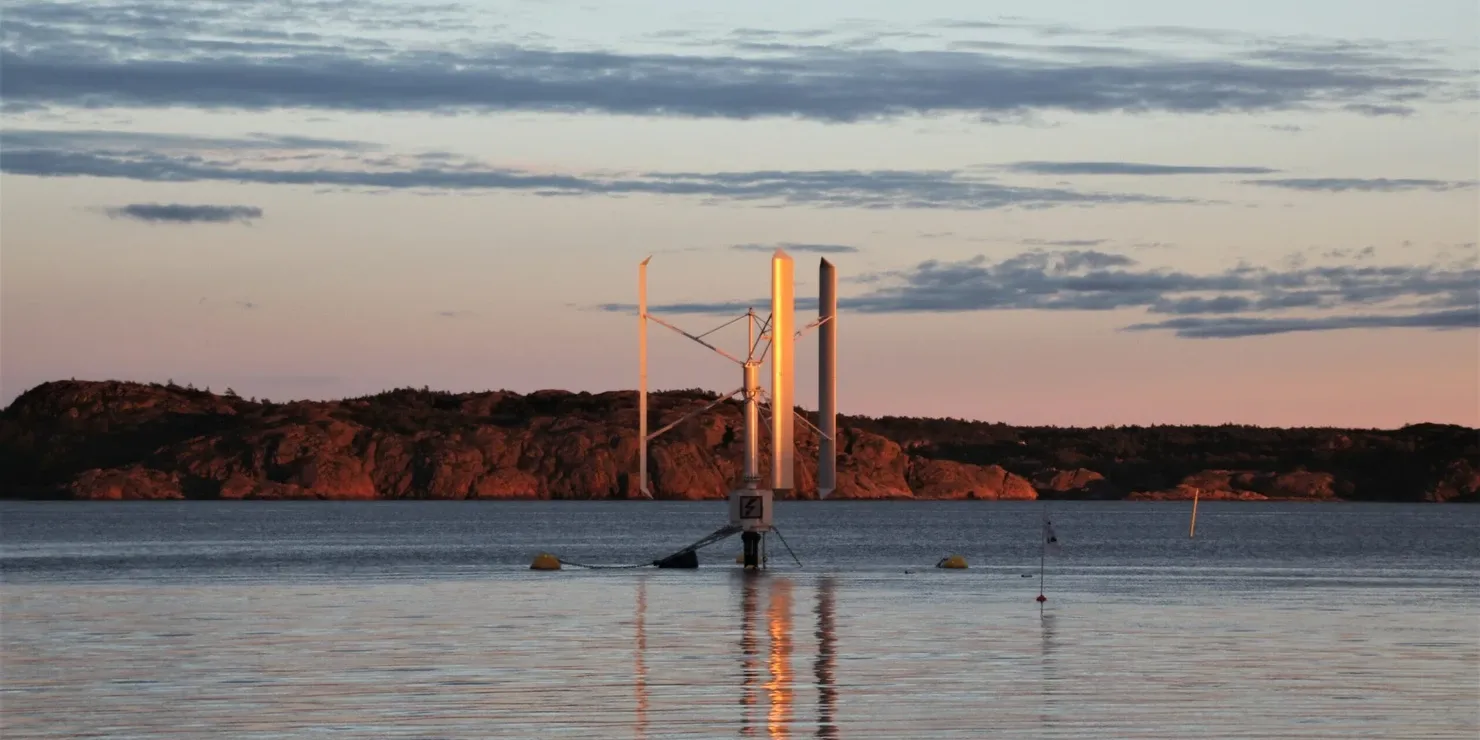
SeaTwirl’s floating vertical-axis wind turbines are being developed for use in marine environments, including applications with smaller electricity needs in coastal and remote areas. Examples could include island groups, remote coastal communities, fish farms and offshore platforms, where electricity supply is in some cases currently dependent on diesel or gas.
Such an installation differs from large wind farms that produce electricity for a wider power system. When a wind turbine is located close to the operation that uses the electricity, the benefits of the electricity produced can also accrue to the local operation. This can create a different relationship between those affected by the development and those benefiting from the electricity generation.
SeaTwirl’s design also has features that may be relevant to smaller and remote operations. The generator and other components requiring servicing are located close to the water surface, and the design is intended to facilitate maintenance using smaller, locally available vessels. The two-bladed design is also intended to allow assembly without large cranes, which could make it possible to use smaller shipyards. This could create opportunities for assembly and maintenance work to also be carried out locally. The extent of these benefits in practice will need to be demonstrated through future demonstration projects and deployments.
Floating wind power does not solve all conflicts or eliminate all environmental impacts. However, smaller solutions adapted to operations that need the electricity can make the local benefits more tangible. If electricity generation can also be combined with local work in assembly and maintenance, the benefits can extend beyond access to electricity alone. This can be part of efforts to increase acceptance, alongside careful site selection, environmental assessment and dialogue with those affected.
The gap between broad support for wind power and lower acceptance near people’s own homes is unlikely to disappear completely. But it can be influenced through several measures: better planning and site selection, reduced environmental impacts and clearer local benefits. As technology develops and more types of locations become available for wind power, opportunities increase to expand electricity generation in ways that work for both the energy system and the communities affected.